
Role of UBE2H in brown fat proteostasis and metabolism
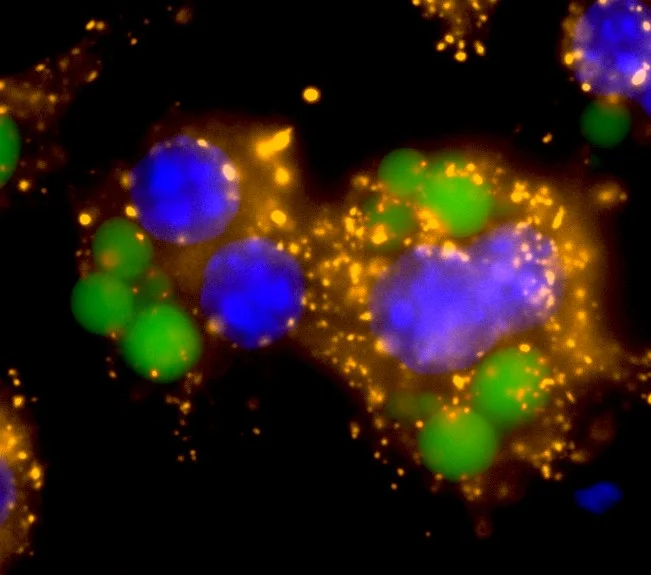
Protein aggregates (yellow) in mouse WT1 brown adipocytes (Nuclei: blue; lipid droplets: green))
© Bartelt
Brown adipose tissue (BAT) is a highly dynamic and metabolically active organ that continuously adapts to changing nutrient availability and thermogenic demands. These adaptations place substantial stress on cellular protein quality control systems, particularly the ubiquitin–proteasome system (UPS), which regulates protein turnover through ubiquitination, yet the specific molecular components involved remain poorly understood. This project investigates the UPS in the regulation of thermogenic adipocyte biology. We will define its role in cellular energy metabolism using human primary and iPSC-derived brown adipocytes, characterize its molecular function in proteostasis by identifying interaction partners and proteomic changes, and assess its physiological relevance in transgenic mouse models during cold exposure and obesity. Finally, we have identified rare human genetic variants linked to UPS and we will study their impact in BAT organoids. Together, these studies will reveal how UPS integrates protein quality control with thermogenic function and energy metabolism.
Project Leader

Dr. med. Dr. rer. biol. hum. Christian Schlein
Institute of Human Genetics, University Medical Center Hamburg-Eppendorf
Martinistraße 52
20246 Hamburg
© Christian Schlein

Prof. Dr. rer. nat. Alexander Bartelt
Chair of Translational Nutritional Medicine, Technical University of Munich
Gregor-Mendel-Str. 2B
85354 Freising
© Astrid Eckert